By
By 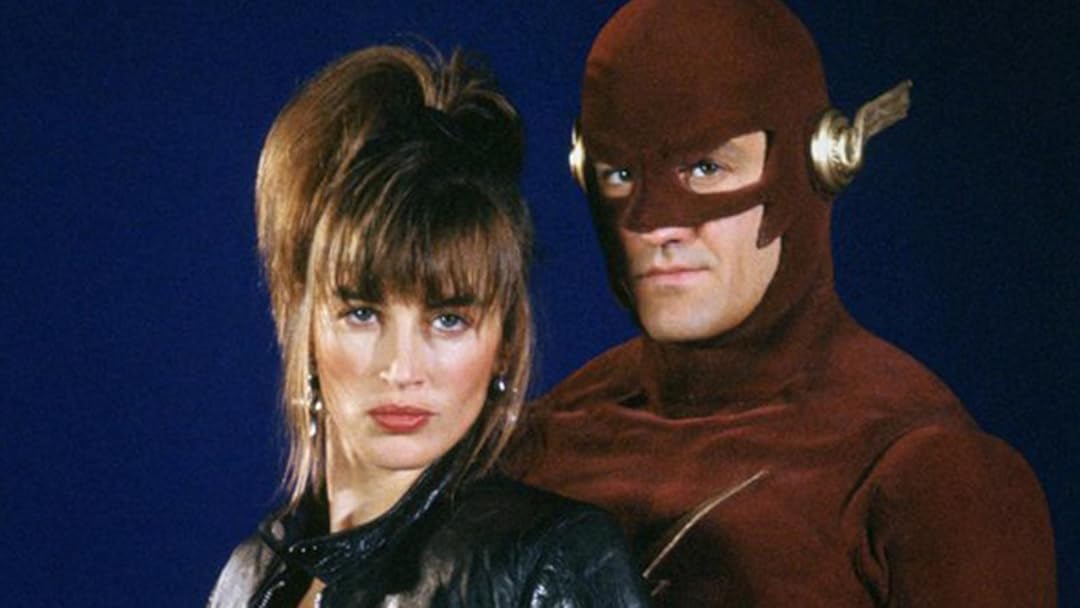
The 1990 television series The Flash stars John Wesley Shipp as Barry Allen, a forensic scientist for the Central City Police Department who gains superhuman speed after a freak laboratory accident. While working late one night, Barry is struck by lightning and doused in a cocktail of volatile chemicals.
He soon discovers he can move at velocities that defy the laws of physics, a transformation that initially overwhelms him until he seeks the help of Dr. Tina McGee (Amanda Pays) at S.T.A.R. Labs, who helps him stabilize his metabolism and provides him with a prototype deep-sea pressure suit to withstand the friction of his speed.
The series is heavily influenced by the “dark deco” aesthetic of Tim Burton’s Batman, presenting a rain-slicked, neon-lit Central City plagued by corruption and a new breed of theatrical criminals. Motivated by the tragic murder of his older brother, Jay—a police motorcycle officer killed by a brutal biker gang led by the villainous Nicholas Pike—Barry adopts the mantle of The Flash.
He balances his life as a meticulous police researcher with his secret identity as a masked vigilante, often using his forensic expertise to solve crimes that his speed alone cannot handle.
A defining feature of the show is its rogue’s gallery, which brought iconic comic book villains to life with a grounded yet campy flair.
The most notable antagonist is the Trickster, played with manic energy by Mark Hamill, whose deadly toys and psychological games push Barry to his limits. Other threats include the cold-blooded Captain Cold, the mirror-traveling Sam Scudder, and the super-intelligent Pollux, a flawed clone of the Flash himself. These encounters often forced Barry to find creative ways to use his momentum and vibration abilities beyond simple running.
The narrative also focuses on Barry’s personal struggles, particularly his burgeoning romance with Tina McGee and his complex relationship with his father, a retired police officer who initially disapproves of “masked longhairs” taking the law into their own hands. Because Barry’s powers require a massive caloric intake to function, the show frequently features lighthearted moments of him consuming enormous amounts of food, adding a humanizing touch to his god-like abilities while highlighting the physical toll of his heroism.
Despite its high production values, cinematic musical score by Danny Elfman, and strong critical reception, The Flash was canceled after only one season due to its expensive $1.5 million-per-episode budget and a difficult time slot against hits like The Cosby Show and The Simpsons. However, it remains a cult classic and a pivotal piece of DC media history, with John Wesley Shipp eventually returning to the franchise decades later to play multiple roles in the modern Arrowverse television shows.



 By
By